artist based in NYC
Sabotage as Labor Resistance
Stigmergy - Part Two
Precarity Structures
Throw When Needed
Shift
There is Only After
Hidden Abodes
She Appears To Be a Wooden Table
Election in Which All Cows Are Black
Troubled Games
Cash Flow
The Incentive Performances
Gender Bending, The Game
Releasing the Matriarch from Odysseus
Stigmergy - Older Works
Collaborative Art Project
about
resume
nod@katiechin.com

Sabotage as Labor Resistance
This ongoing body of work looks at sabotage as a form of labor resistance. Several works in this series are complete while others are in progress.
Sabotage happens quietly in the margins. Unlike riots, sabotage resists without spectacle, through small, deliberate acts of property damage or productivity slowdown. I am interested in sabotage as discreet acts that disrupt power and reconfigure systems from within. These quiet gestures as protest are often hard to attribute to specific individuals, yet they have immense power when taken into the collective imagination.
This new series traces sabotage throughout time, highlighting examples from early labor movements and wartime strategies to modern digital resistance. I will be translating these historical tactics into sculptural forms that combine ceramics, metal, glass, and other found industrial and organic materials.

Short Pay, Short Shovels
2026
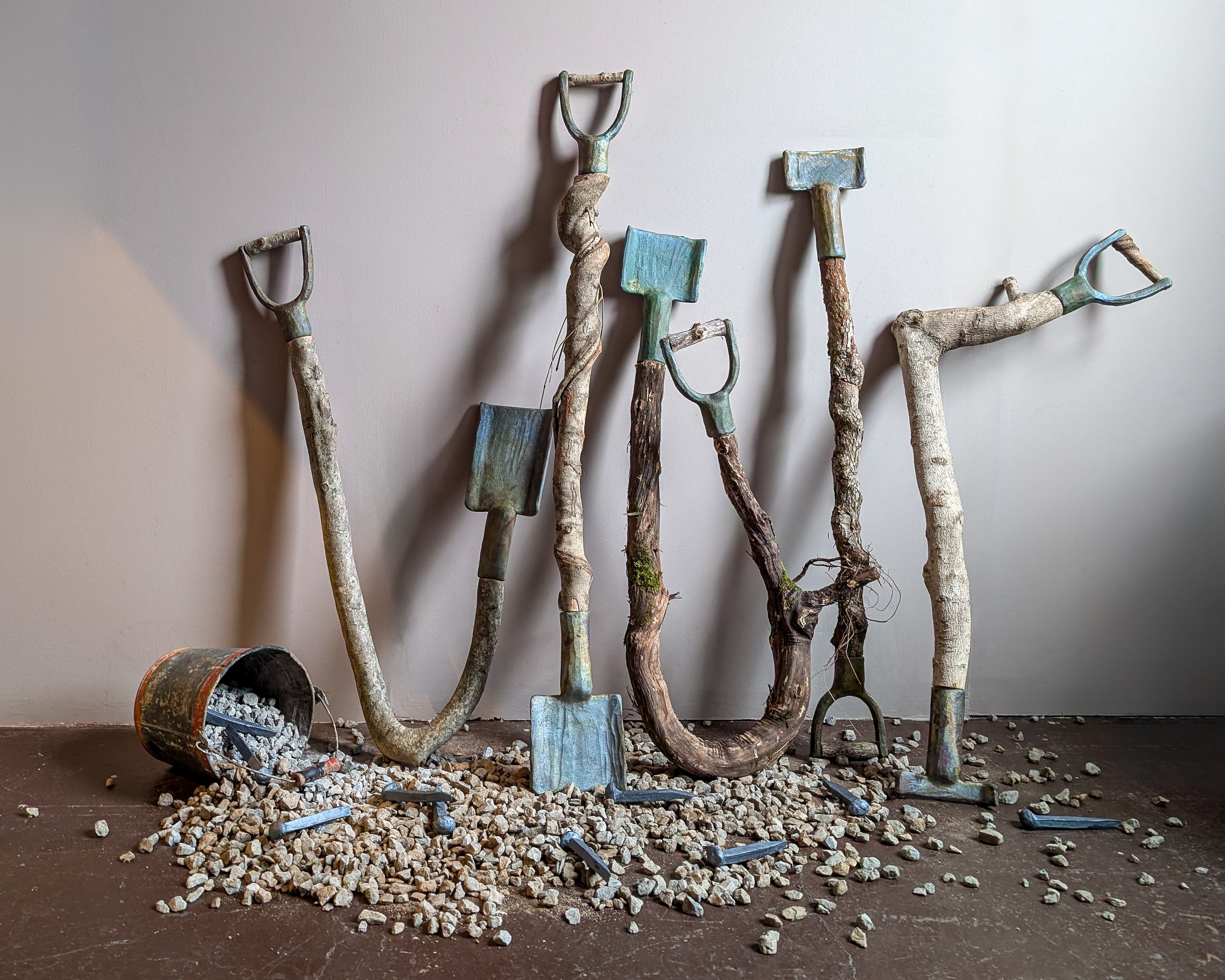
Ceramic, tree trunks, gravel, metal bucket
54” x 84” x 30”
This work is currently on view at the Bronx Museum as part of their AIM Biennial.
The installation is inspired by a tale somewhere between fact and folklore, a story often credited as an early example of sabotage as labor resistance. In the early 1900s, a group of railroad workers quietly cut a few inches from their shovel blades in response to wage cuts. They kept working at full tilt, or appeared to, but each scoop moved less gravel. By reshaping their tools, they reshaped the terms of their labor; a slowdown disguised as compliance. Actions subtle enough to pass unnoticed yet disruptive enough to matter.
The phrase “short pay, short shovels” has outlived the event itself. The early 20th-century union, Industrial Workers of the World (IWW), and others helped spread this story across many communities. It persists as collective wisdom: how small, nearly unseen acts of resistance can echo through time. This reflects my interest in how individual gestures can seed collective possibility.
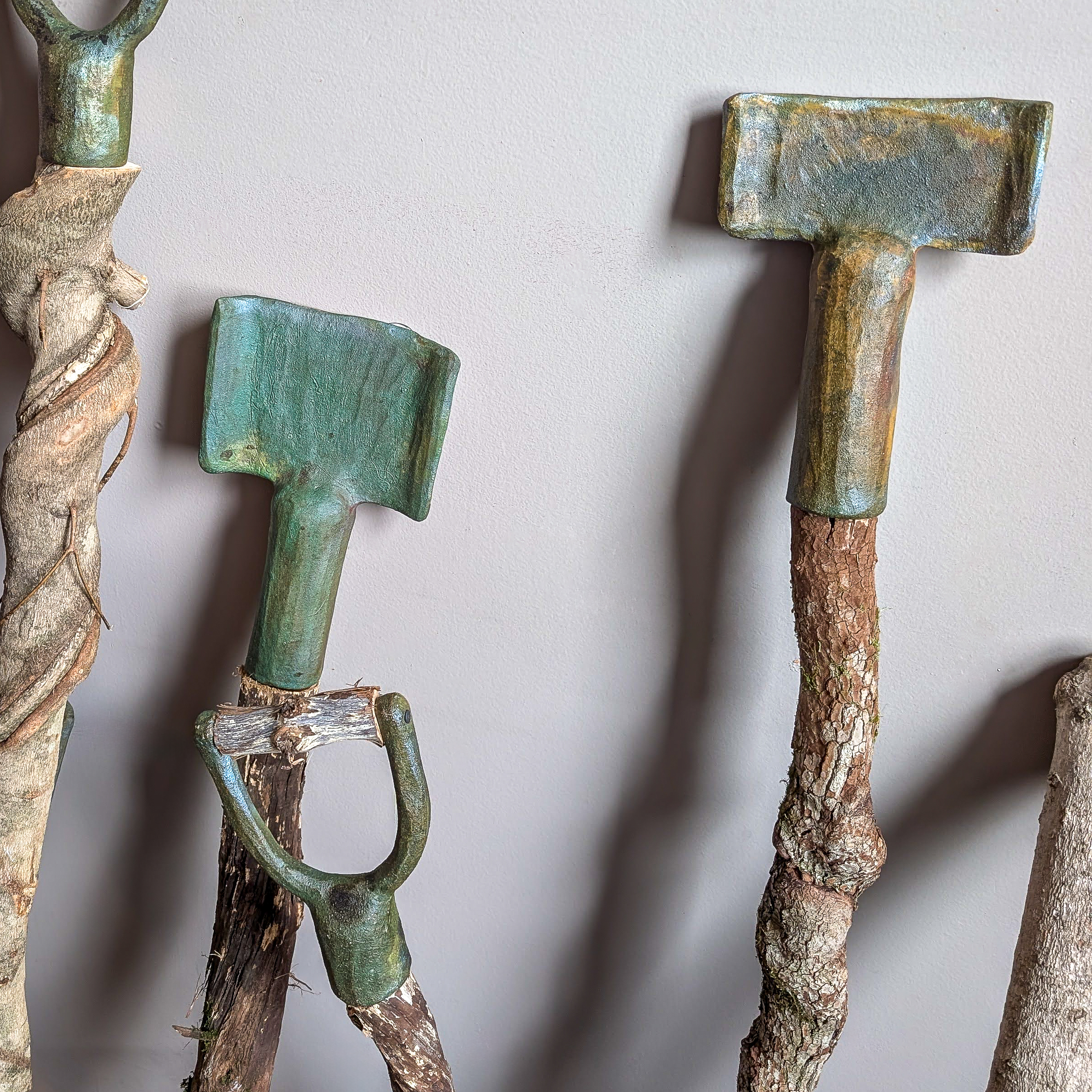
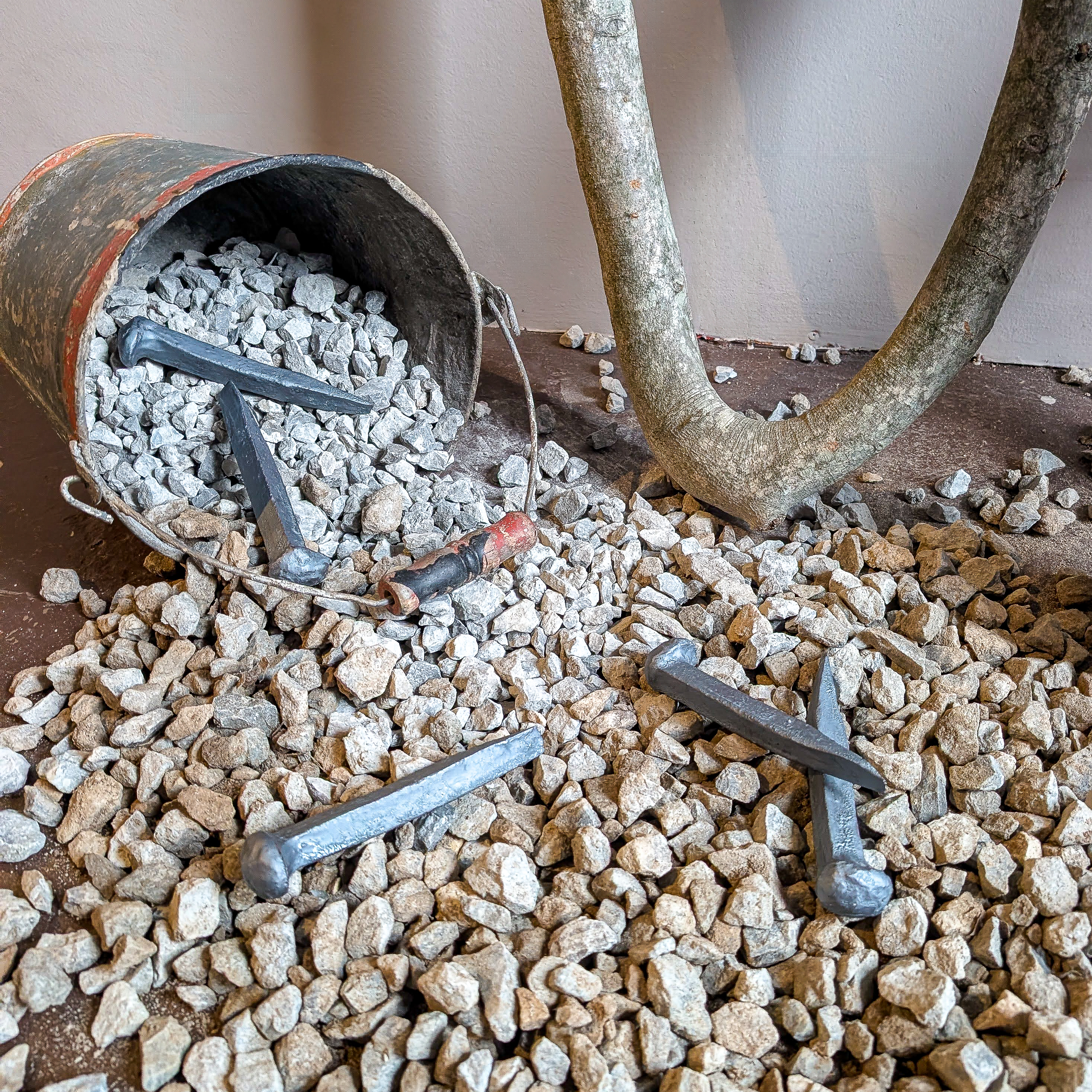
Sculpted in ceramic, these shovel blades and handles are joined to tree trunk shafts that twist and curve. Their unusual forms come from years of growing under pressure and environmental stress. The trunks’ contortions echo the adaptive strategies of workers navigating exploitative conditions. Leaning at rest, the shovels recall bodies paused after a long shift. Gravel and ceramic railroad spikes lie scattered, evidence of unfinished labor.


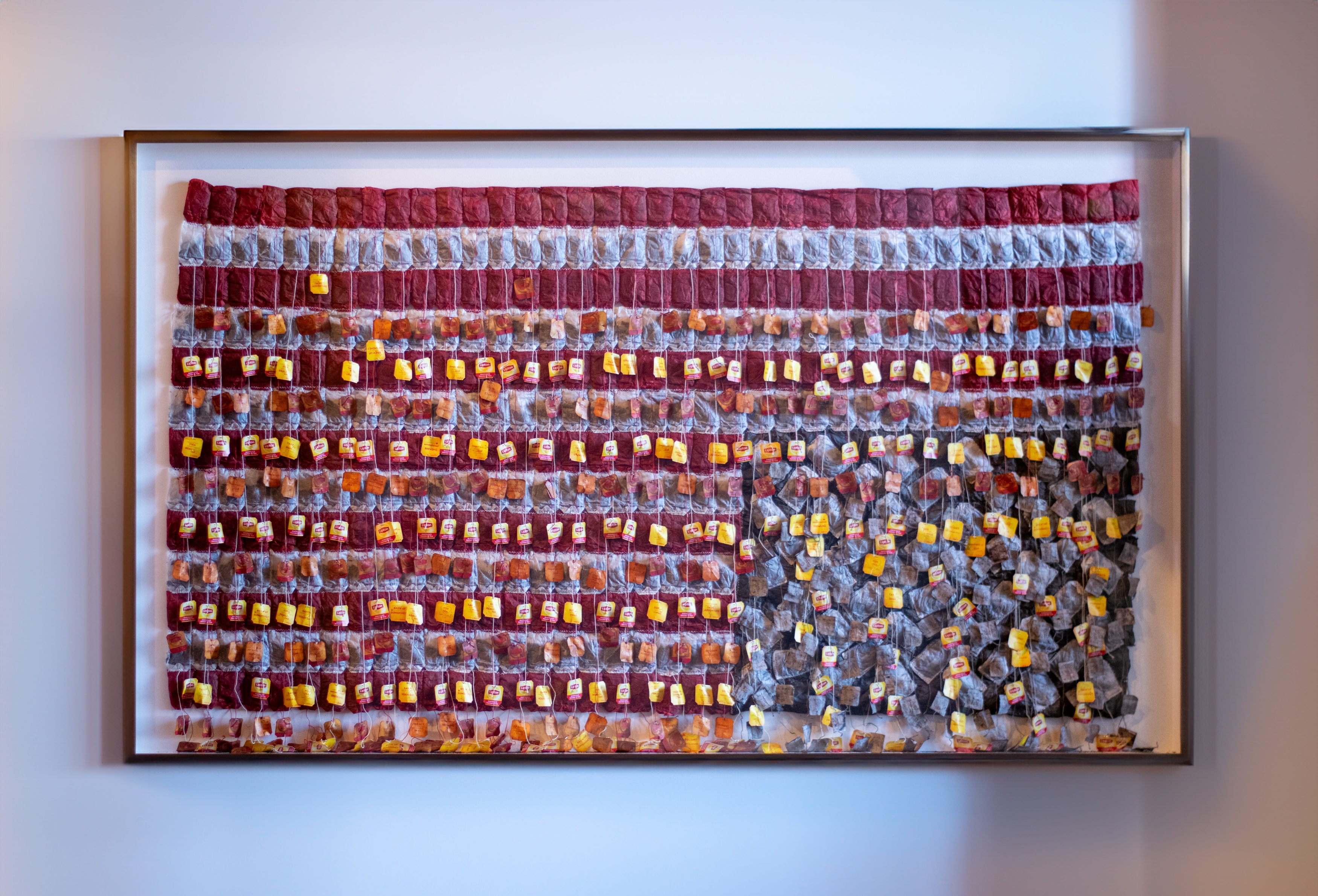
4 U.S. Code § 8: No Repression Without Representation
2025
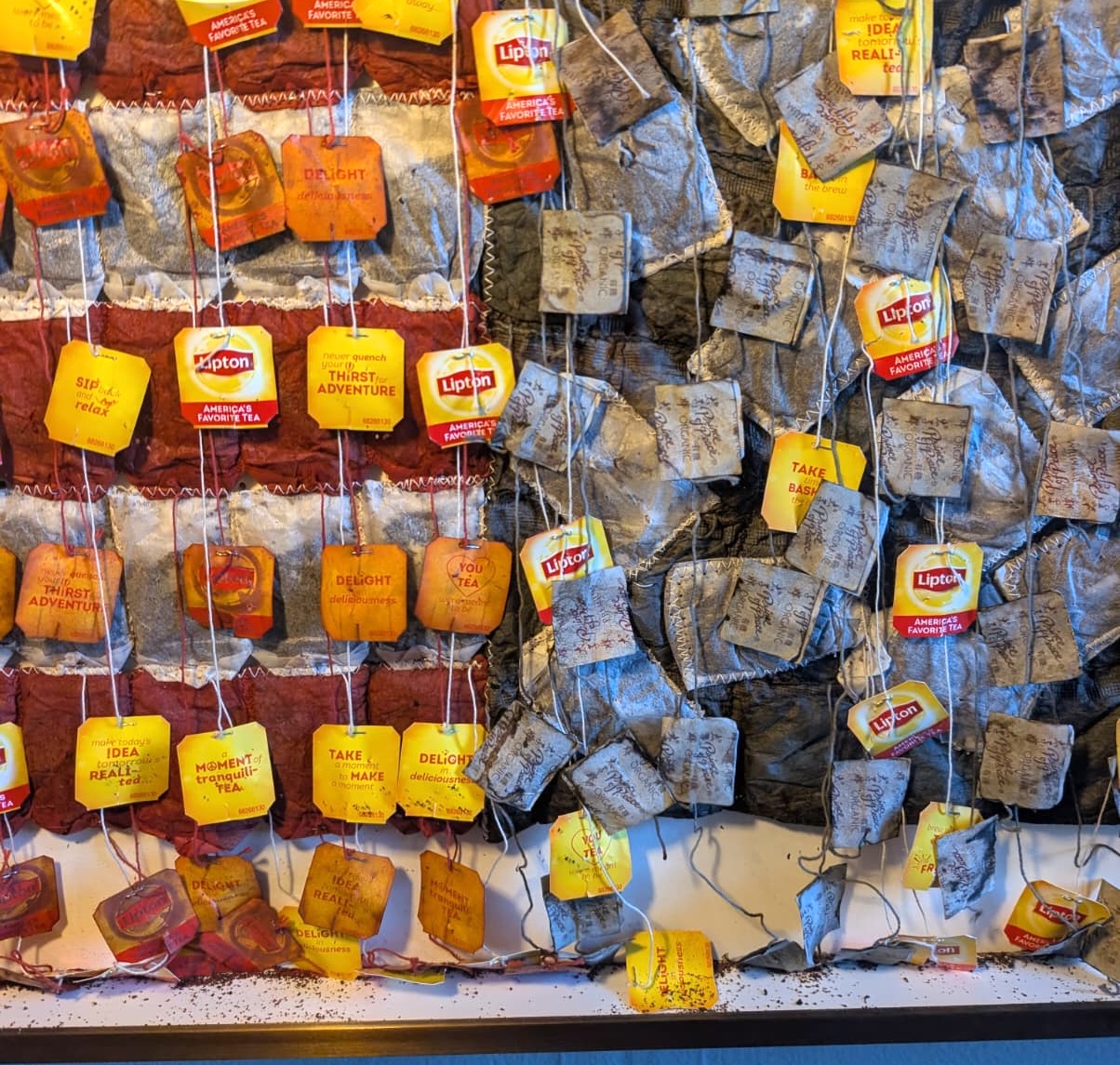
Tea bags
33 3/4 X 57 3/4 X 2"
The American flag, sewn from tea bags, hangs upside down in accordance with the U.S. Flag Code’s signal of “dire distress to life or property.” It connects the Boston Tea Party, a foundational act of sabotage in U.S. history, to recent protests by National Park employees. In 2025, Yosemite workers hung flags upside down over the side of El Capitan in response to government budget cuts and threats to public service. By connecting these two moments, the work confronts a contradiction: acts of sabotage are often framed today as anti-patriotic, even though the nation’s founding mythology is rooted in similar tactics of resistance.